


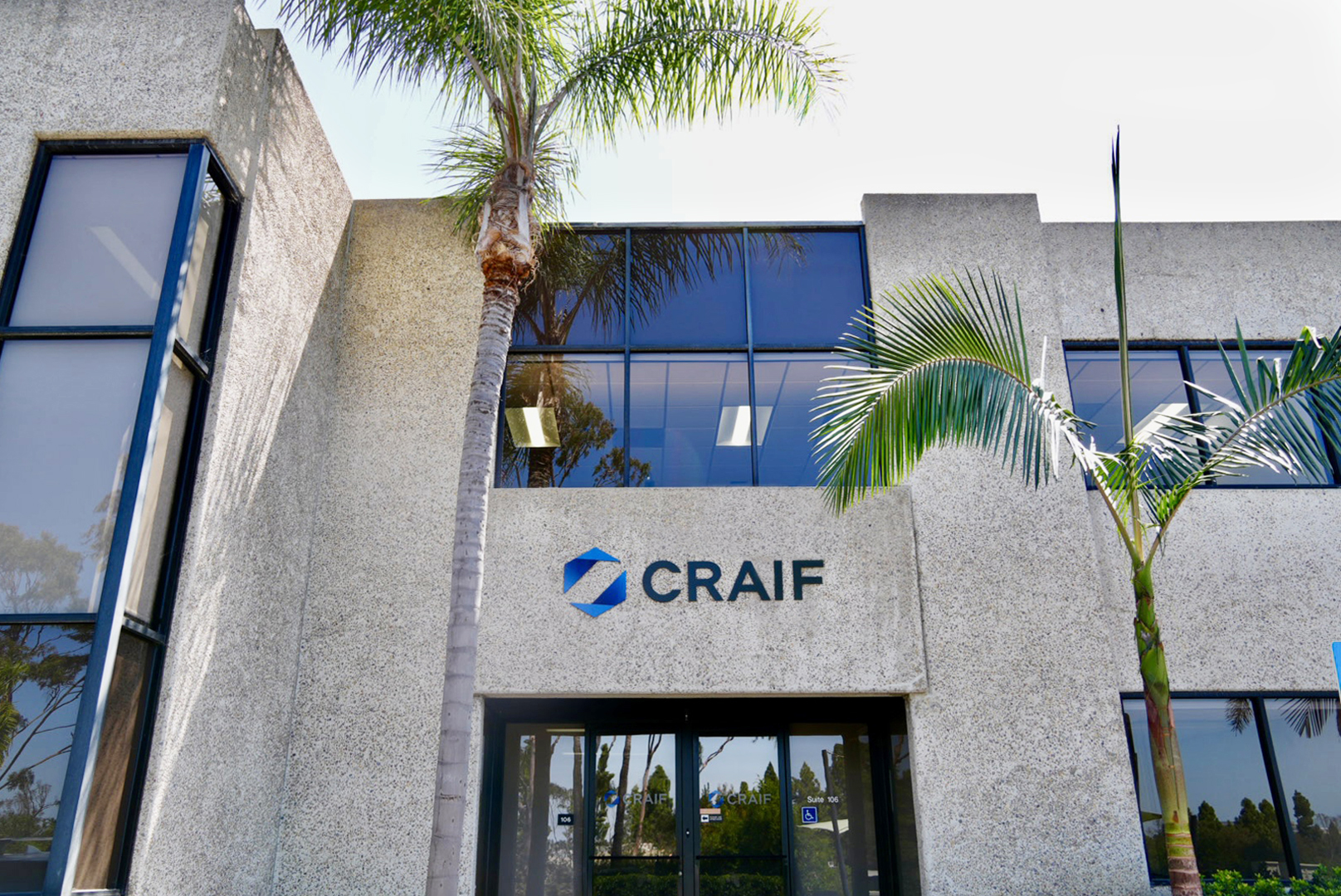
Tokyo, Japan – April 24, 2026 – Craif Inc., a bio-AI startup dedicated to early cancer detection, announced the opening of its bio-AI laboratory in San Diego, California. CEO Ryuichi Onose has concurrently relocated to San Diego to personally lead the establishment of Craif's global business operations.
Craif is committed to its vision of "helping people live out their natural lifespan" through the early detection of disease and the optimization of treatment. The company was an early pioneer in the practical application of microRNA (miRNA)—the focus of the 2024 Nobel Prize in Physiology or Medicine—and has developed proprietary AI-driven technology to analyze urinary miRNA. Its flagship product, miSignal Scan, enables ultra-early risk detection of hard-to-treat cancers such as pancreatic cancer. In Japan, the test is now rapidly expanding, available at over 2,400 medical institutions, 5,000 pharmacies and drugstores, through e-commerce platforms, corporations, and via publicly funded programs by local governments. Craif is also preparing to submit a regulatory approval application in Japan for its software-based medical device program targeting pancreatic cancer diagnosis in 2026.
Cancer remains a global health challenge. Craif aims to bring its Japan-developed early cancer detection technology, testing operations, and business model to the United States, working toward establishing a new global standard for early cancer detection. Building on the establishment of its U.S. legal entity and its tenure at JLABS San Diego—operated by Johnson & Johnson—Craif has been steadily building its U.S. foundation. The company is currently collaborating with 30 medical institutions across 15 states, laying the groundwork for future insurance reimbursement in the area of early pancreatic cancer detection. With the opening of this new laboratory, Craif strengthens its R&D capabilities in anticipation of a U.S. service launch, while the CEO's relocation to San Diego accelerates global hiring, fundraising, and the establishment of an organizational structure to drive the U.S. business forward.
- Name: Craif U.S. Laboratory
- Location: 6370 Nancy Ridge Drive, Suite 106, San Diego, CA 92121
- Opening Date: April 1, 2026
- Primary Role: Sample measurement and analysis hub for U.S. operations
As a university spinout from Japan, we have run hard with the ambition to change the world through groundbreaking technology. There were earlier opportunities to enter the U.S. market, but circumstances including COVID-19 prevented us from doing so. In hindsight, that time allowed us to concentrate on building our science and business development in Japan, elevating Craif's bio-AI technology to a world-leading standard.
What may have looked like a roundabout path ultimately gave us the foundation to compete in the U.S.—the world's premier biotech ecosystem—with confidence in our technology, team, and culture. That said, making early cancer detection a reality requires overcoming enormous challenges across research, clinical, and commercial domains. To do that, we must compete head-on in the U.S. market for both talent and capital.
Achieving this from Japan alone would be extremely difficult. I made the decision that as a founder, I need to be on the front lines myself. The real challenge starts now. I am committed to taking on the U.S. market and, together with Craif, shaping the future of healthcare.
Craif is a Bio-AI startup founded in 2018, focused on advancing the early detection of disease and the realization of personalized treatment. By integrating advanced AI algorithms with our proprietary biomarker analysis platform—NANO IP® (NANO Intelligence Platform)—we decode a wide range of biological signals such as DNA and microRNAs from body fluids including urine.This technology powers the development of groundbreaking diagnostic tests that make ultra-early cancer detection, early treatment, and faster recovery possible.Through the widespread social implementation of biotechnology and AI, Craif is committed to helping people live out their natural lifespan.

